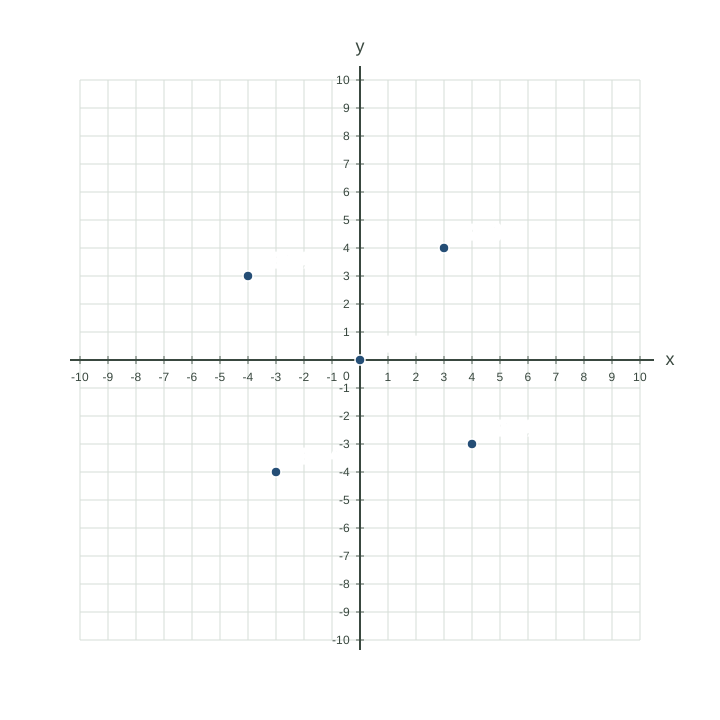
Coordinate plane generator
Start with ordered pairs: plot labelled points, read coordinates, or print a blank grid.
Explore & print ↗Five free tools that connect numbers, rules and diagrams. Change an example, work through the explanation, then print a practice sheet with a separate answer key. No account or software to install.
New: a full practice set.Generate 6–12 number line questions or download three ready-made worksheet packs →
Start with ordered pairs: plot labelled points, read coordinates, or print a blank grid.
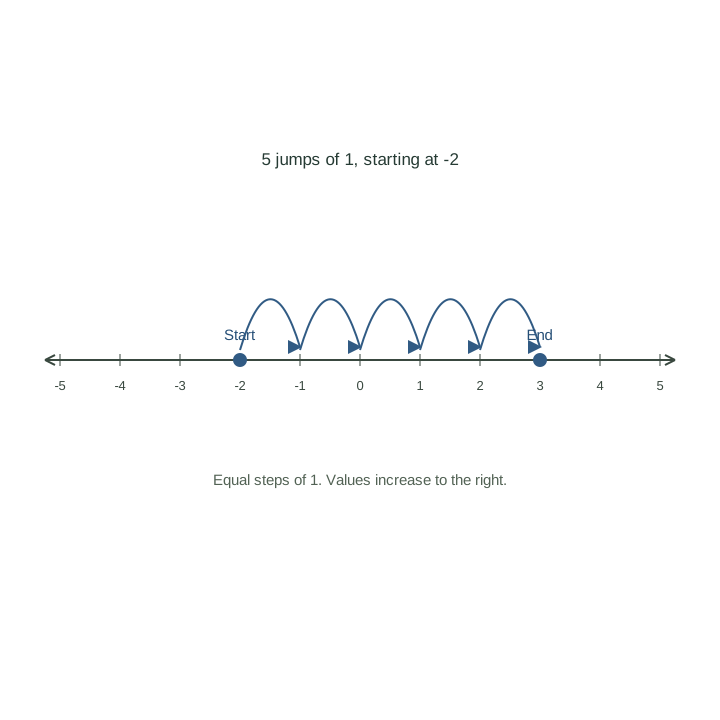
Explore & print ↗For locating numbers, explaining addition and subtraction, and learning interval notation.
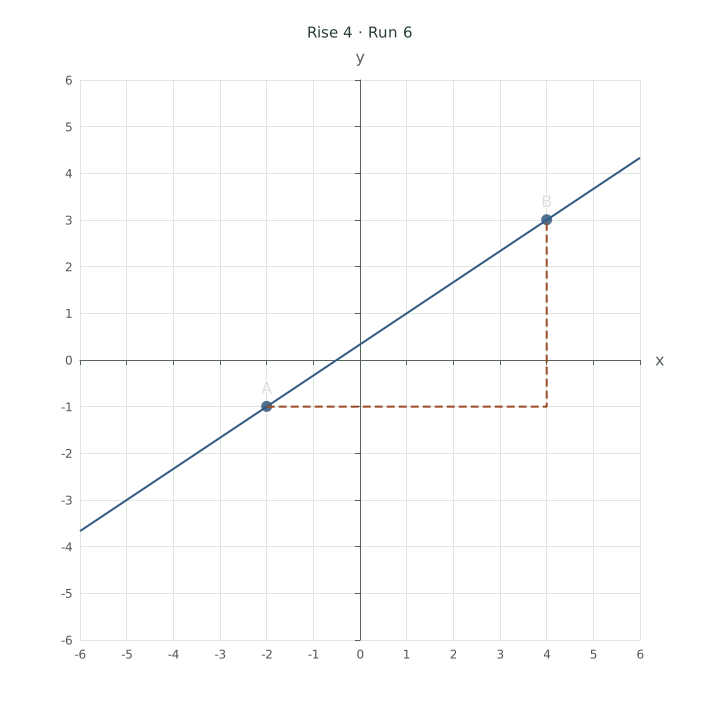
Explore & print ↗For connecting two ordered pairs to rise, run, gradient and the equation of a straight line.
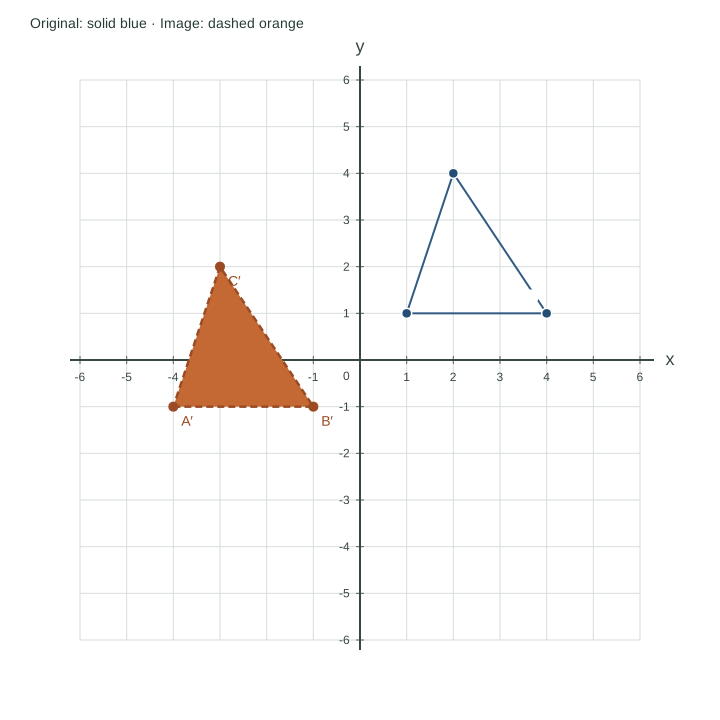
Explore & print ↗For seeing how a coordinate rule moves every vertex of a triangle or another simple polygon.
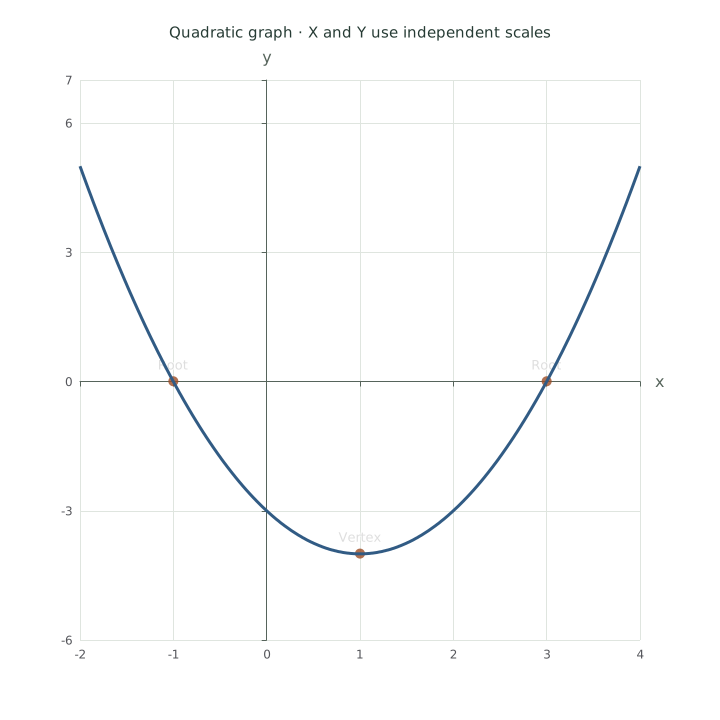
Explore & print ↗For learning how a quadratic equation, its key features and a plotted parabola describe the same function.
Explore & print ↗Use a number line for values on one axis. Move to a coordinate plane when every point needs both X and Y. The slope tool connects two points to a straight-line equation; the quadratic tool connects three coefficients to a curved graph. Transformations show how one rule moves every vertex of a shape.
Explore mode shows the calculation alongside the diagram. Practice mode hides the completed result so a learner can work on paper and reveal it when ready. Download the question page alone or include an answer key. The tools do not grade responses or claim alignment with a specific curriculum.
Each tool page includes original A4 and US Letter PDFs that work without JavaScript. Use the SVG diagrams in a document or slide, or download the example values as CSV. Customized inputs stay in your browser. Worksheet PDFs use high-resolution images; SVG diagrams remain vector.
For experimental observations, survey results or category comparisons, use the statistical chart makers. For personal routines, try the printable habit tracker.
Try dot plot worksheets, bar graph worksheets and line graph worksheets with editable data and worked answer keys.