How to read this chart
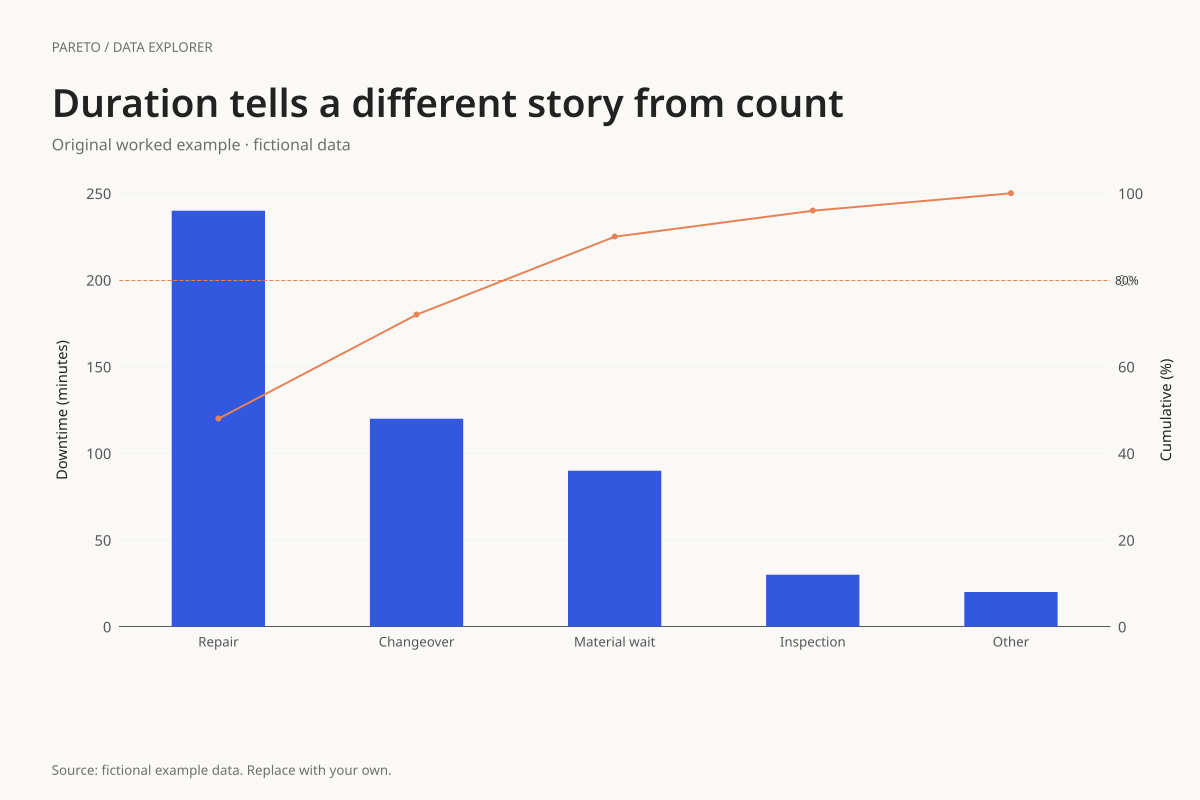
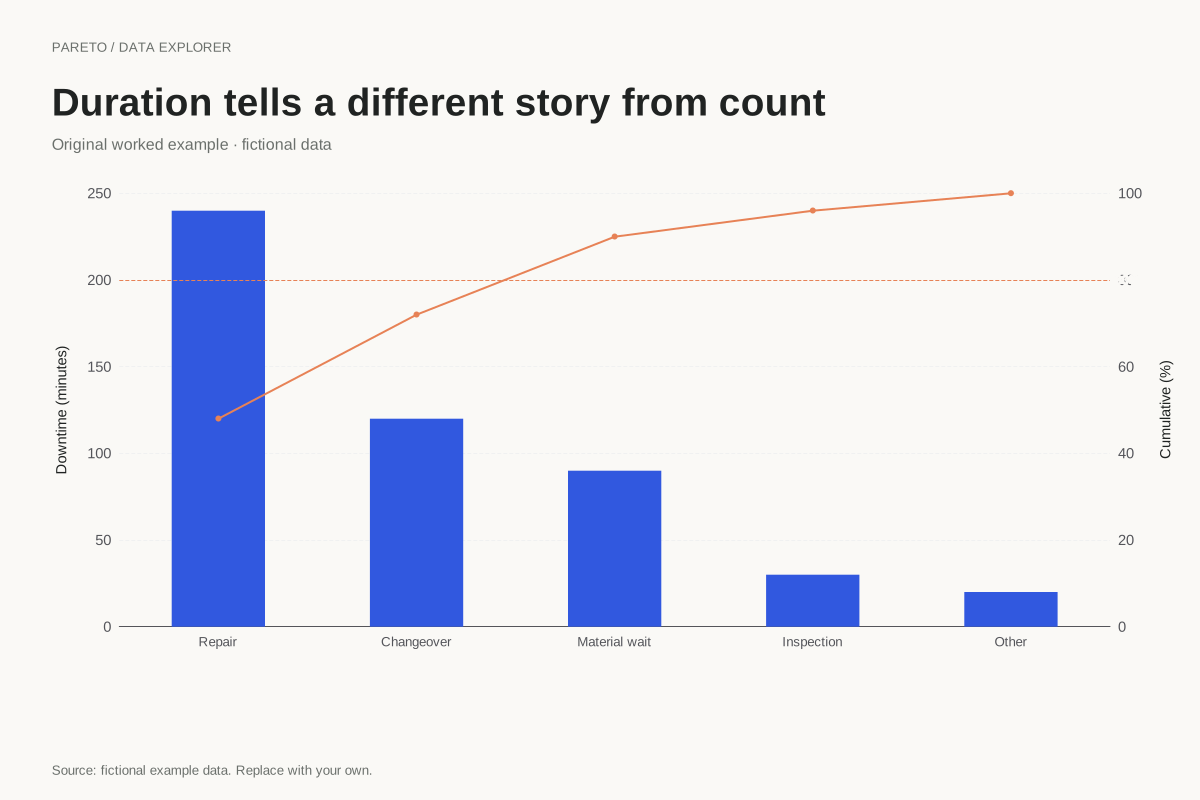
Repair contributes 240 minutes, changeover 120, material wait 90, inspection 30 and other 20. The total is 500 minutes. The cumulative percentages are 48%, 72%, 90%, 96% and 100%; the first three categories exceed the 80% reference.
A duration ranking can differ from a frequency ranking. One long repair could accumulate more minutes than many brief inspections. This table does not contain incident counts, so neither the number of events nor average minutes per event can be recovered from it.
Try the calculation yourself
Use the same time unit in every row and ensure the periods do not overlap if you intend the sum to represent total downtime. For a real process, state the observation window and whether simultaneous stoppages are counted separately. Replace the title and source note with that context before exporting.
Open this exact example, change the data or calculation settings, and compare the result. The CSV preserves the input rows; the ECharts JSON contains drawing options.
What this example cannot tell you
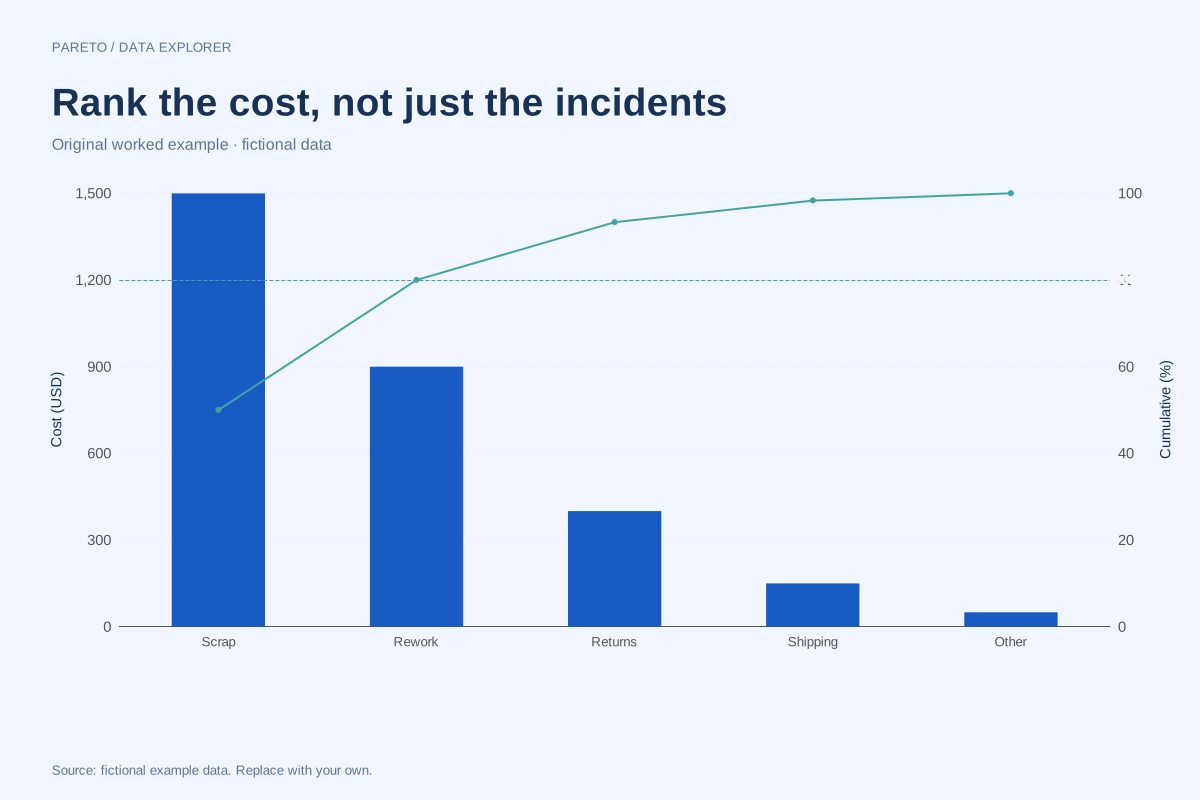
The durations were invented for a worked calculation. They do not establish equipment reliability, utilization or root causes. Lost time, lost output and repair cost are different measures and should not be mixed into one numeric column.
Can I combine hours and minutes in the same values column?
Convert to one unit first. For example, two hours becomes 120 minutes when the axis is minutes. The chart treats supplied numbers as one comparable measure; it cannot infer that a value of 2 means hours while another value of 30 means minutes.
Calculation convention
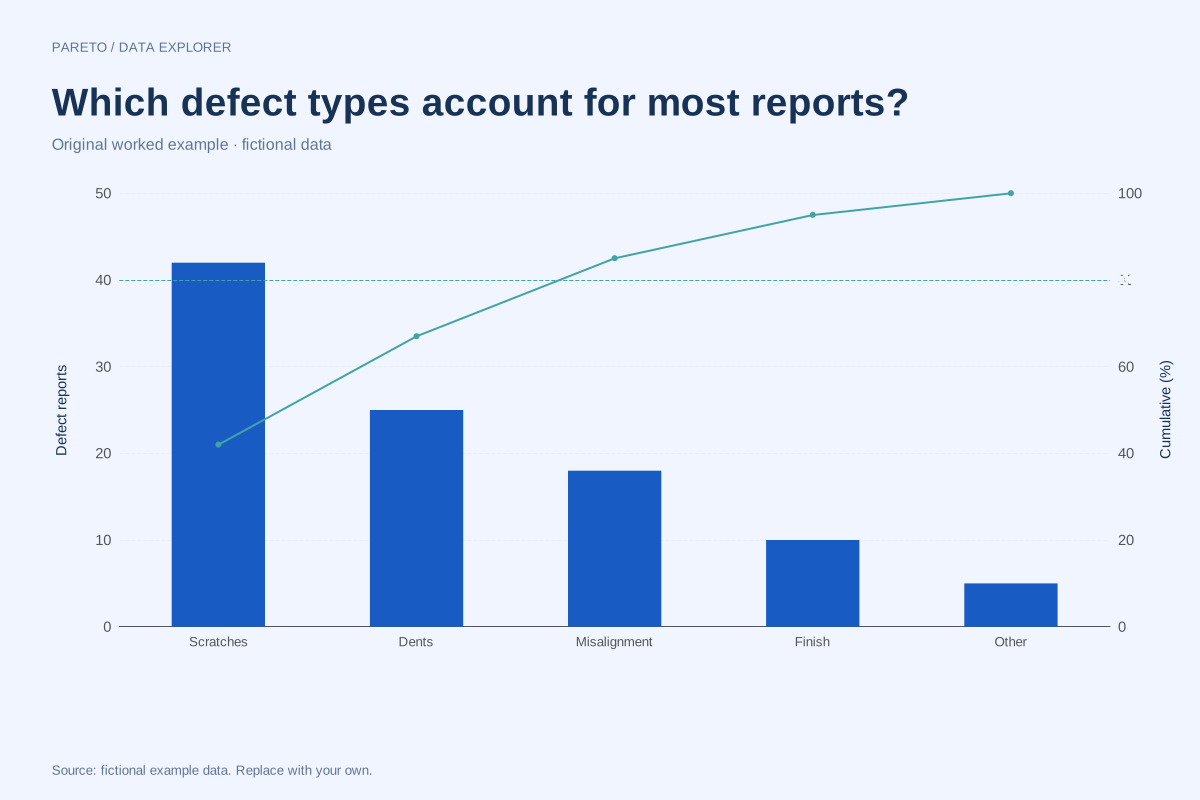
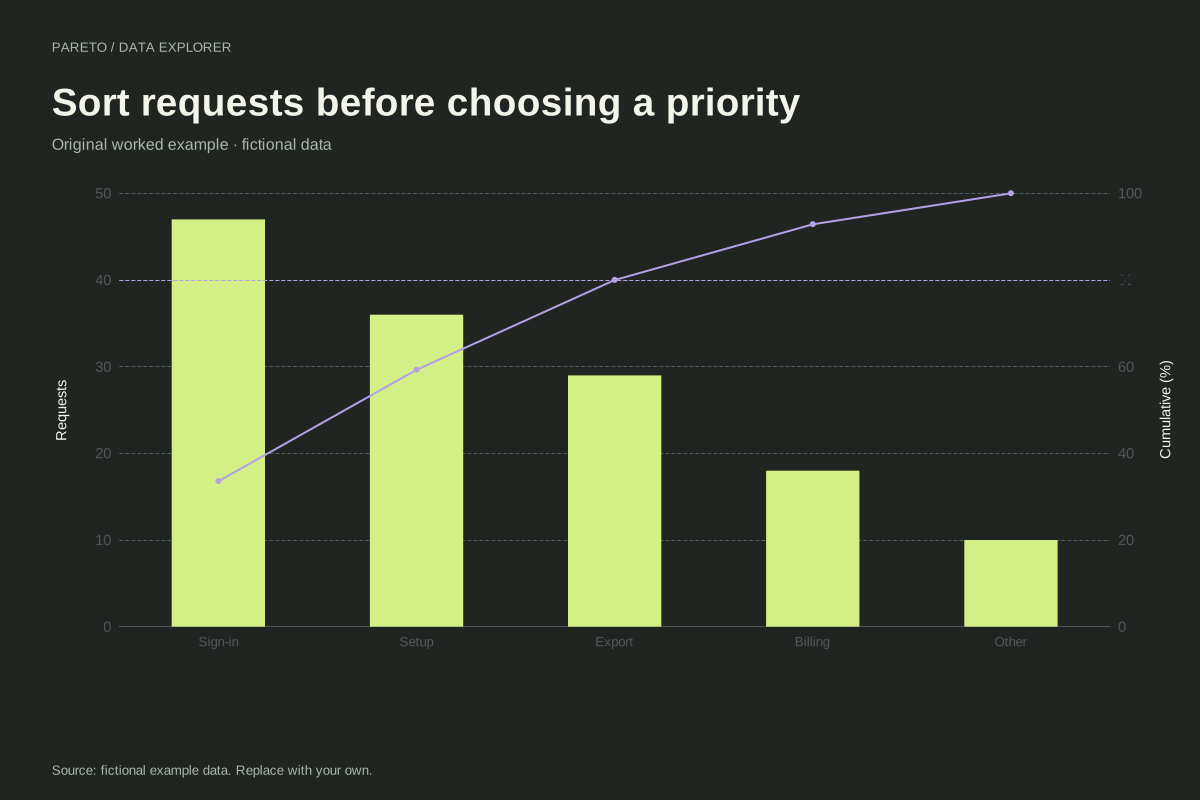
Enter one nonnegative value for each unique category. That value may be an incident count, a cost or a duration, provided the unit is consistent across rows. A category that leads by count may not lead by cost. Choose the measure that answers the decision question and make its unit visible on the left axis.
Method background: ASQ: Pareto chart procedure.
Created by SupaMakers for ChartsAI · September 8, 2026. Source and reuse terms.